
Find Out More: Chronic Pain
What is chronic pain?
Chronic pain is usually defined as pain that persists beyond the normal time that tissues take to heal following an injury. Most soft tissue injuries heal up within weeks, although some can take several months to completely heal.
If a pain continues longer than 3-6 months, it is usually described by pain specialists as “chronic” pain. It is helpful to understand the differences between chronic, persistent pain and acute pain.
Acute pain: short-term pains act as an alarm, telling us that something is wrong. While most minor pains are easily treated and quickly forgotten, others are a sign of something more serious that we shouldn't ignore. For example, the pain of a broken leg is helpful because it makes us rest the leg until it heals.
Chronic pain: persistent pain though often serves no useful purpose. The pain messages linked to long-term conditions such as back pain or arthritis are not helpful, and can be annoying and sometimes devastating.
Over time, the pain may affect how we function, including our ability to work and our sleep patterns. It can also have a negative effect on our family and friends.
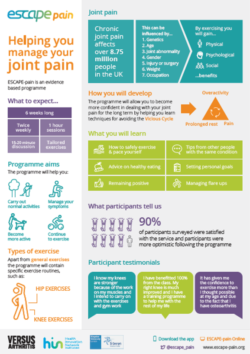
The ESCAPE Pain programme was developed to help people with chronic pain.
ESCAPE-pain stands for Enabling Self-management and Coping with Arthritic Pain using Exercise
Research in this area
Deborah Antcliff, a specialist physiotherapist and one of the PRISM team has recently had an article published in a journal called Musculoskeletal Care. In this she writes about the importance of activity pacing for people with chronic pain to help them avoid the 'boom-bust cycle'
Boom bust cycle:
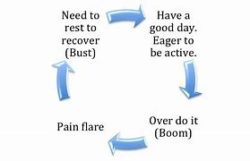
The boom-bust cycle may become an upsetting cycle in which you feel that your symptoms control what activities you are able to do and when you can do them. Activity pacing is a strategy that can help to reduce the boom-bust cycle and some of the negative thoughts that result from this cycle.
Activity pacing helps even out the 'boom-bust cycle' 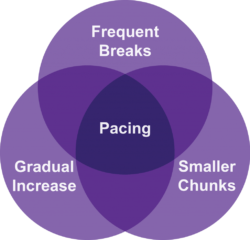
You can read the full article by clicking on the link here:
"Pacing does help you get your life back": The acceptability of a newly developed activity pacing framework for chronic pain/fatigue